Utah-New Mexico Vacation-Part 10

After our stay in Santa Fe, we headed north to Colorado.  We awoke in Colorado Springs to a dusting of snow.  As the sun warmed the ground the snow melt everywhere except Pikes Peak visible in the background of the Garden of the Gods Park in the picture below.

In August 1859 when two surveyors started out from Denver City to begin a town site, soon to be called Colorado City they came upon a beautiful area of sandstone formations. One of the surveyors suggested that it would be a “capital place for a beer garden” when the country grew up. His companion, exclaimed, “Beer Garden! Why it is a fit place for the Gods to assemble. We will call it the Garden of the Gods.” It has been so called ever since.

Below is a picture of Balanced Rock within the Park.

This is a picture of my husband posing as though he was the full weight of the rock on his shoulder.

To get the perspective of size, this is a picture of my husband next to the rock.

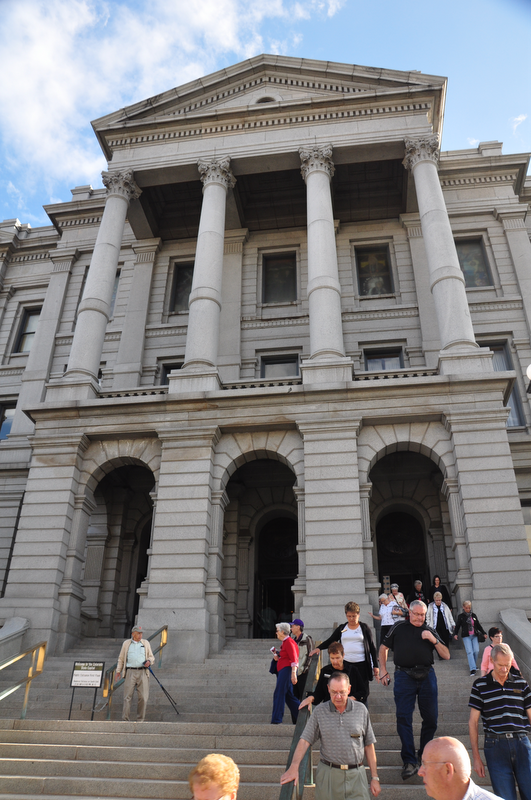
After leaving Garden of the Gods, we travelled down the highway to Denver.  We enjoyed a tour of downtown Denver with our step-aboard guide which included an inside look at the Capitol building.
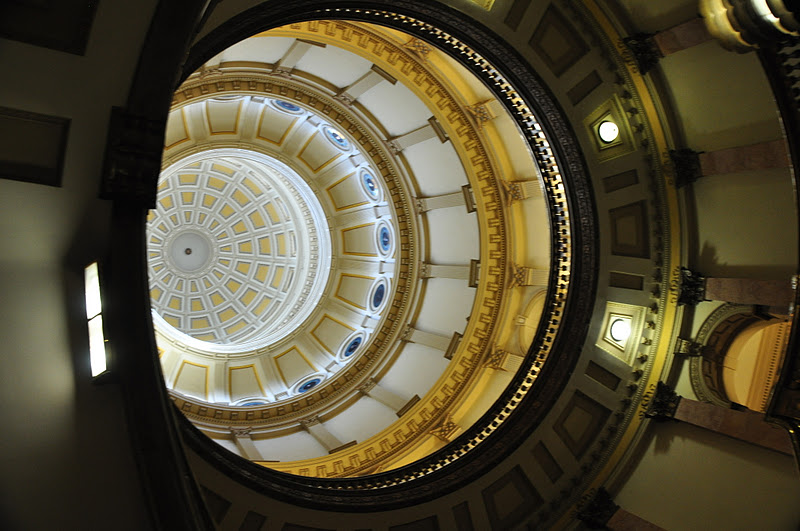
The capitol building was built in the 1890’s and in 1908 24 karat gold was used to plate the dome. The gold plated dome commemorates Colorado’s Gold Rush days, and the early pioneers and miners who helped build the state of Colorado.

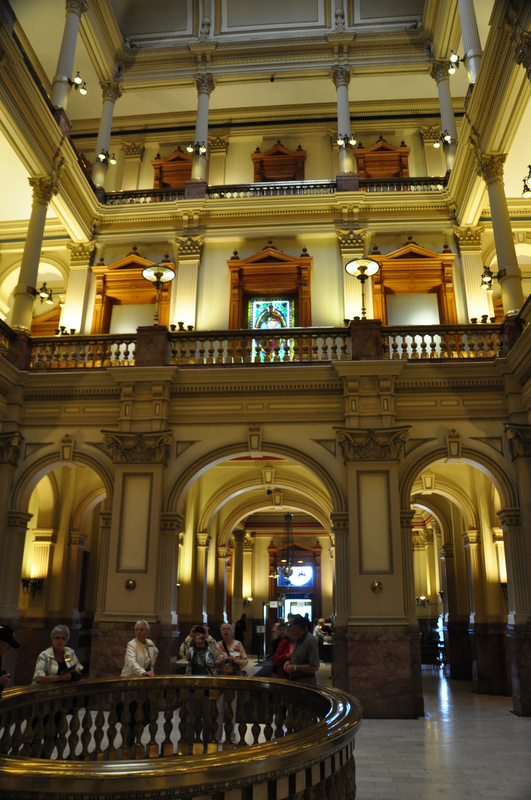
The architecture inside the Capitol building was spectacular.

The interior of the capitol was built with the rare and priceless Colorado Rose Onyx.  The mauve marble is so rare that its known supply was completely used up in the process of beautifying the capitol.

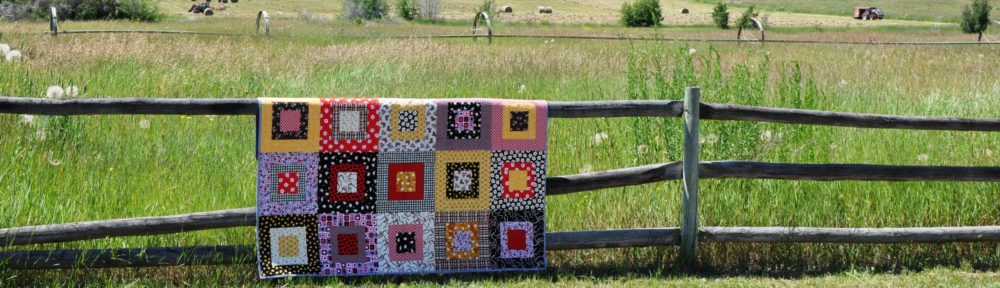
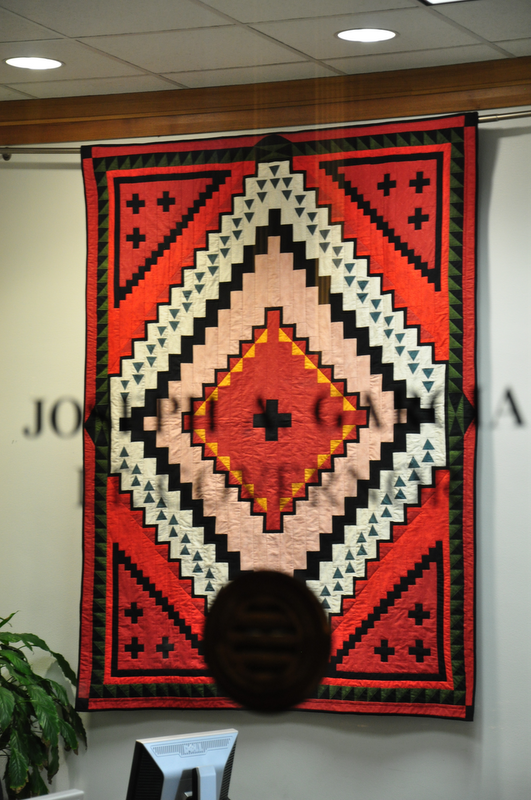
This quilt, hanging in the Capitol building is comprised of blocks that symbolize Colorado.  The 19 stars on the left and right side of the quilt represent the 38th state–Colorado.  A total of 250 hours of hand embroidery and machine stitching was necessary to complete the quilt.  The quilt was originally hung in the 2007 Colorado Quilting Council Quilt Show which was held in the Capitol building.  What a fantastic location for a quilt show!

I spied this quilt hanging in the office of the Governor.

Utah-New Mexico Vacation – Part 9

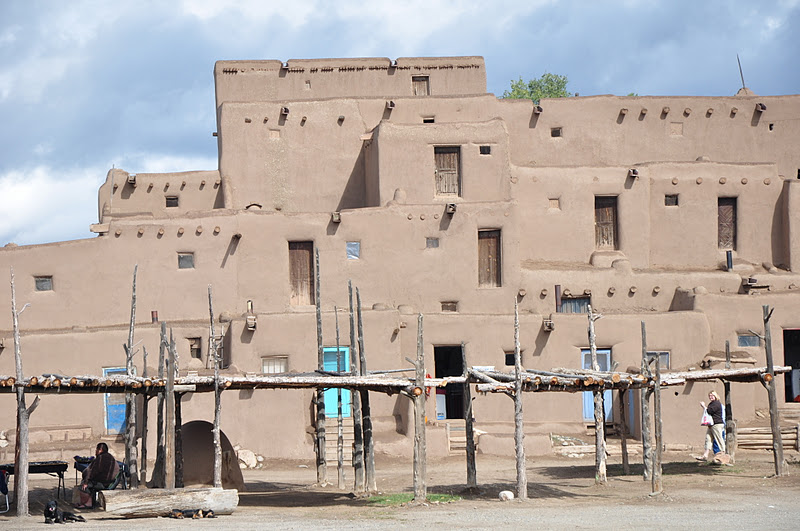
From Santa Fe, we took a day trip up to Taos.  In Taos, we visited the Taos Pueblo.  The Taos Pueblo is the only living Native American community designated both a World Heritage Site by UNESCO and a National Historic Landmark. The multi-storied adobe buildings have been continuously inhabited for over 1000 years.


The Pueblo is made entirely of adobe — earth mixed with water and straw, then either poured into forms or made into sun-dried bricks. The walls are frequently several feet thick. The roofs of each of the five stories are supported by large timbers hauled down from the mountain forests. Smaller pieces of wood are placed side-by-side on top of the large timbers; then the whole roof is covered with packed dirt. The outside surfaces of the Pueblo are continuously maintained by replastering with think layers of mud. Interior walls are carefully coated with thin washes of white earth to keep them clean and bright. The Pueblo is actually many individual homes, built side-by-side and in layers, with common walls but no connecting doorways. In earlier days there were no doors or windows and entry was gained only from the top.

The North-Side Pueblo is said to be one of the most photographed and painted buildings in the Western Hemisphere. It is the largest multi storied pueblo structure still existing.
The pueblo wall completely encloses the village except at the entrance.  The wall used to be much taller for protection from surrounding tribes.  The pueblo’s primary purpose was for defense. Up to as late as 1900, access to the rooms on lower floors was by ladders on the outside to the roof, and then down an inside ladder. In case of an attack, outside ladders could easily be pulled up.
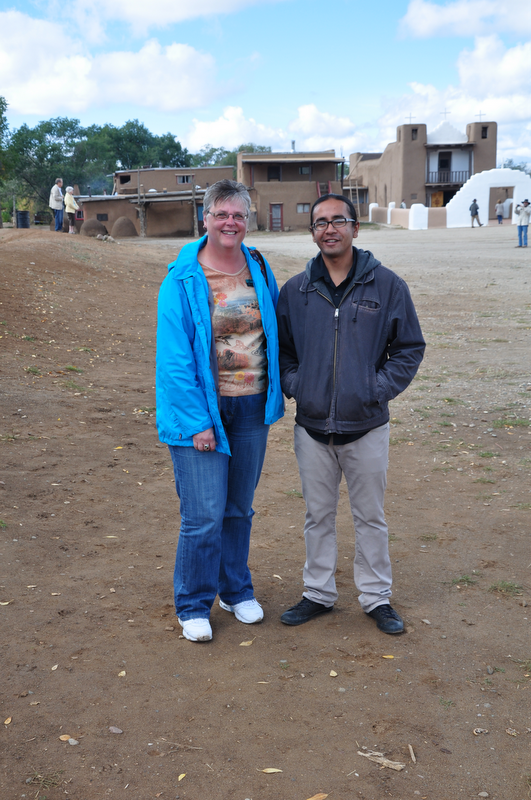
This is a picture of me with our guide–a university student who supplements his income by narrating tours of the Pueblo.  I asked him if he was often asked to pose for pictures with tourists.  He told me that yes, he did get lots of requests, but he didn’t mind as he thought it was neat to be in photo albums all over the world.

After visiting the Pueblo, we headed into Taos to the Taos Plaza.  Our bus parked in a parking lot within walking distance of a quilt shop–Taos Adobe Quilting.
http://www.taosadobequiltingandmore.com/

This is a picture of me outside the shop.

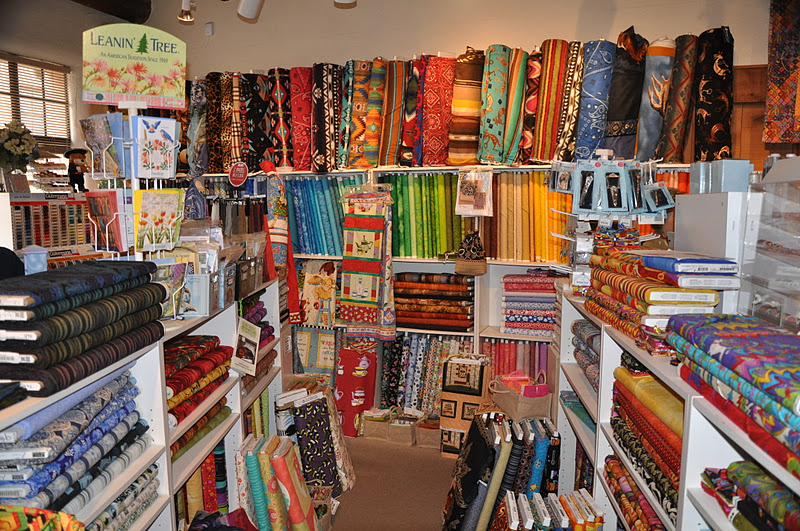
The shop was small but jam packed with colourful fabrics.

I bought a selection of SW Themed fat quarters…
…and a kit to make a pepper table runner.  The pattern and fabrics are from a collection called Caliente Peppers by south Sea Imports.  We have seen lots of red peppers hanging from buildings and in doorways so this table runner will definitely remind me of my trip to the SW. 

Utah-New Mexico Vacation – Part 8

In Santa Fe, we visited the famous and beautiful Loretto Chapel.
The story of the Loretto Chapel began with the appointment of Bishop Jean Baptisite Lamy to the New Mexico Territory in 1850. The following year, Father Lamy asked the Sisters of Loretto to establish a school for girls in the town of Santa Fe.

In 1853, the Sisters opened the Academy of Our Lady of Light (aka Loretto). Over the next twenty years, the day and boarding school flourished and grew. By 1870, the Sisters believed the school needed a chapel. Funds were raised, land was purchased, and in 1873, work on Loretto Chapel began.


Only as the Chapel neared completion did the Sisters realize that access to the choir loft, 22 feet above, would have to be by ladder. A staircase would take up too much space in the small chapel. Climbing a ladder to the choir loft would be a great difficulty for the Sisters. This posed an impossible dilemma that no architect or carpenter was able to solve.

According to the story, the Sisters, seeking an answer to their architectural design dilemma, made a novena to St. Joseph, the patron saint of carpenters. Legend says on the ninth and final day of the novena, a man showed up at the chapel with a donkey and a toolbox looking for work. Months later the elegant circular staircase was completed and the carpenter disappeared without pay or thanks. Some believe that he was St. Joseph himself.

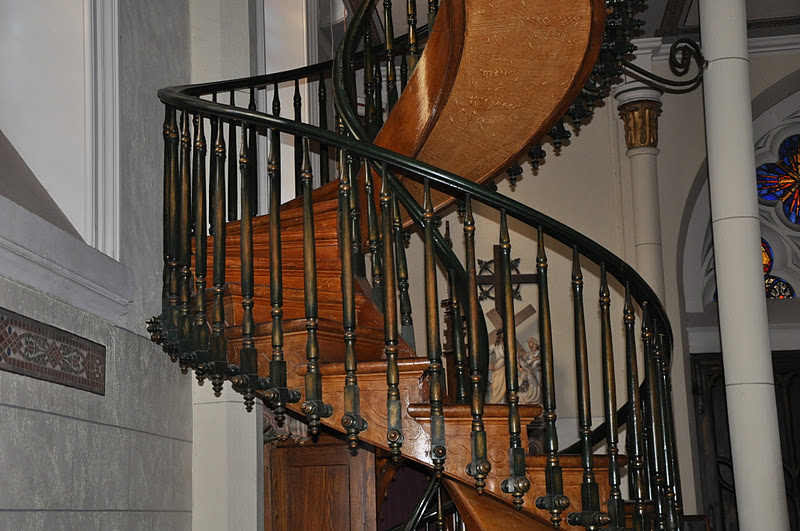
The staircase is a wonder. Some of the design considerations are said to still perplex experts today. Built without nails (only wooden pegs) the staircase has two 360 degree turns with no visible means of support — a kind of double helix design — and with no railing. It was not until 1887 — ten years after the staircase was completed — that an artisan added the railing.

There are also design questions about the number of stair risers compared to the height of the choir loft and about the types of wood and other materials used in the stairway’s construction — some of which appear not to have been available from any known local source.

The staircase in Loretto Chapel is truly a miracle of construction and design.

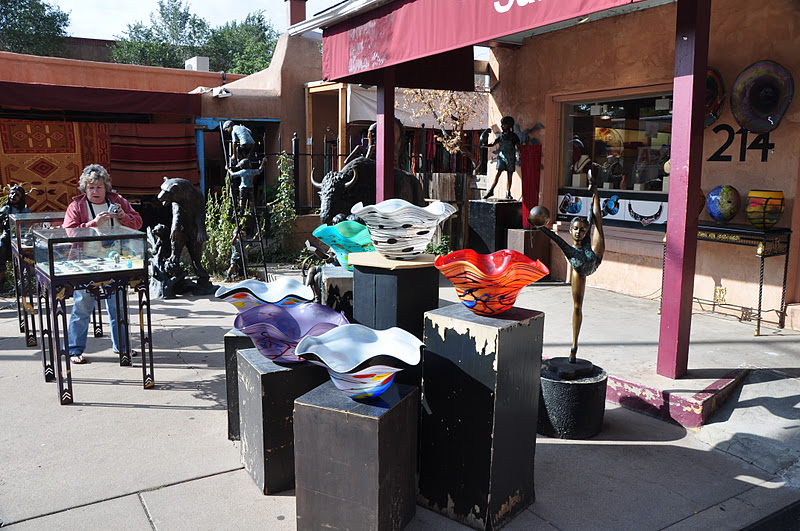
After visiting Loretto Chapel, we wandered through the shops in the Plaza in downtown Santa Fe.

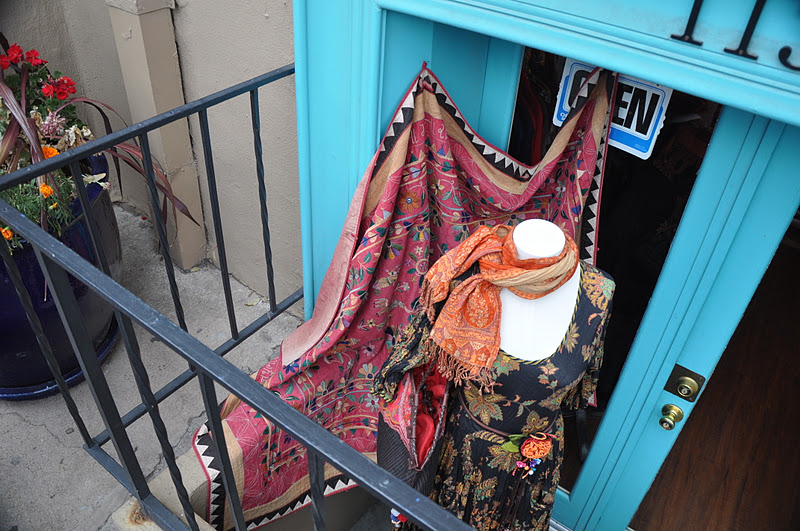
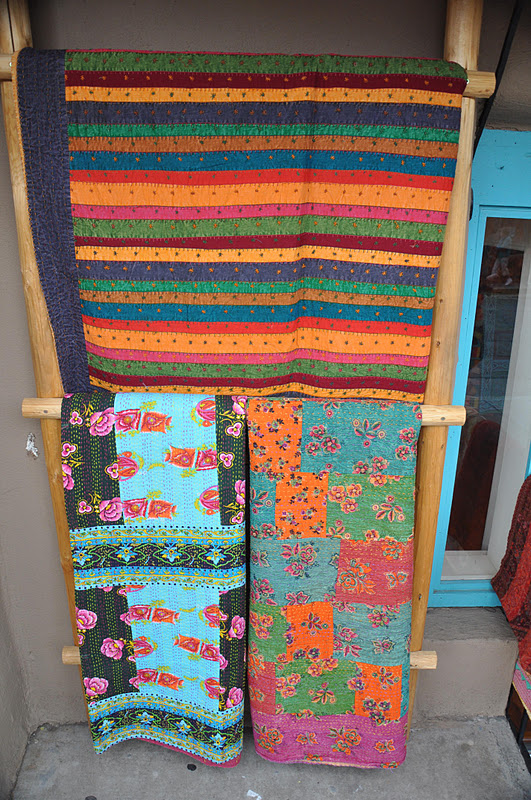
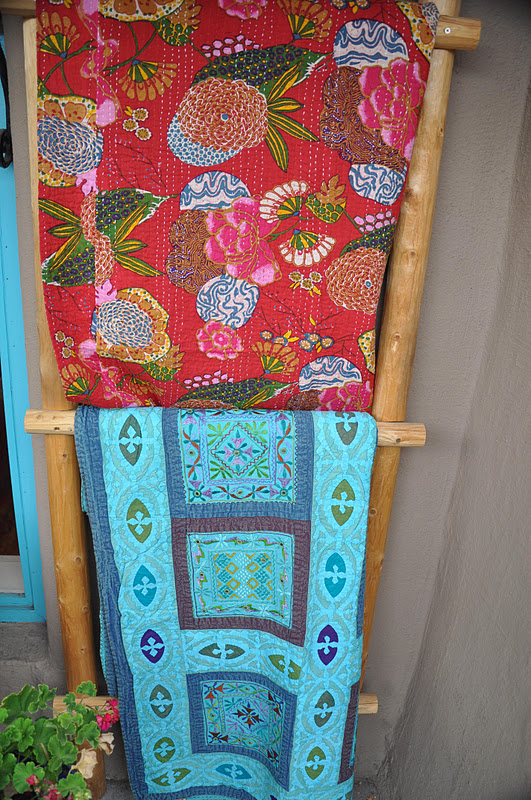
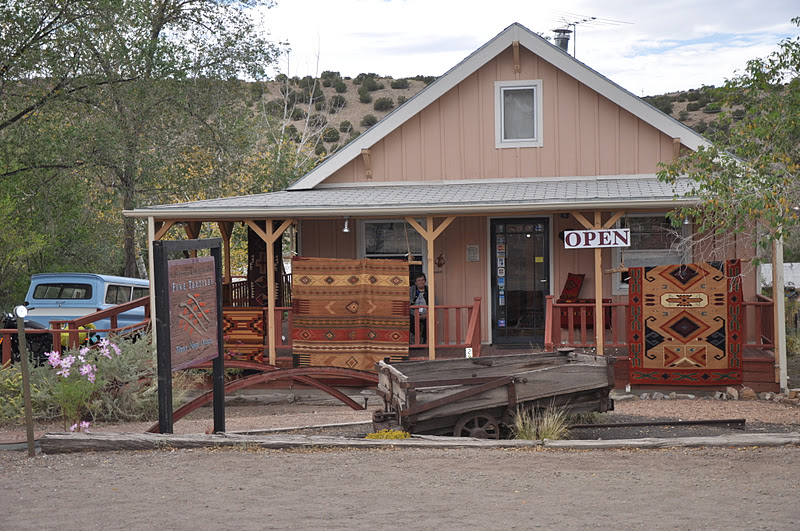
I didn’t find a quilt shop in the Plaza, but I did find these wonderful textiles and quilts hanging outside of a colourful little shop.

Utah-New Mexico Vacation – Part 7

We travelled along the Turquoise Trail through the Sandia Mountains between Albuquerque and Santa Fe, New Mexico.  Along the Trail we passed through a tiny town of 132 people called, Madrid.
In the Disney Touchstone Pictures comedy Wild Hogs, starring John Travolta, Tim Allen, Martin Lawrence, and William H. Macy, four middle-aged wannabe bikers take a road trip from Ohio to the West Coast spending time in New Mexico. The movie was almost entirely filmed in New Mexico.
The majority of the film was shot in the former mining town of Madrid. After the town’s mine closed in the 1800s, it became somewhat of a ghost town until the 1970s when artists began to settle in the village. Today, it is a thriving artists’ colony complete with shops, galleries, restaurants, and bed and breakfasts. 
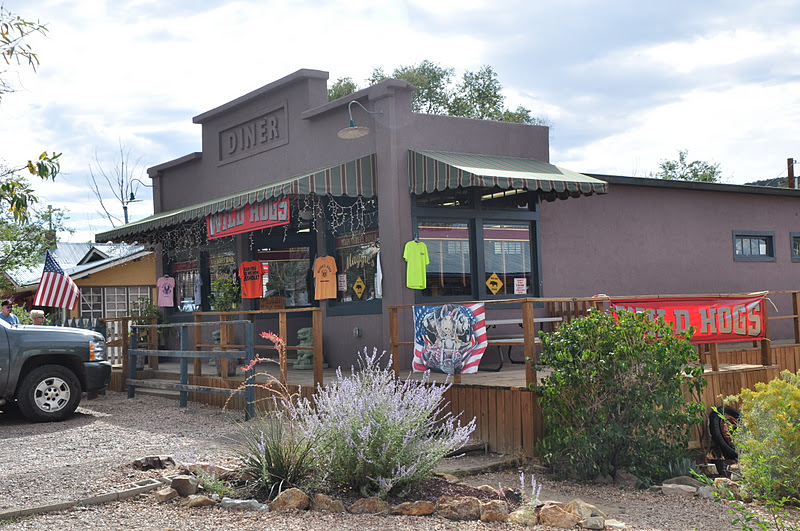
This is a picture of Maggie’s Diner that was built specifically as a set for the movie.  Today, Maggie’s Diner is not a restaurant, but a gift shop dedicated to selling anything, “Wild Hog”.


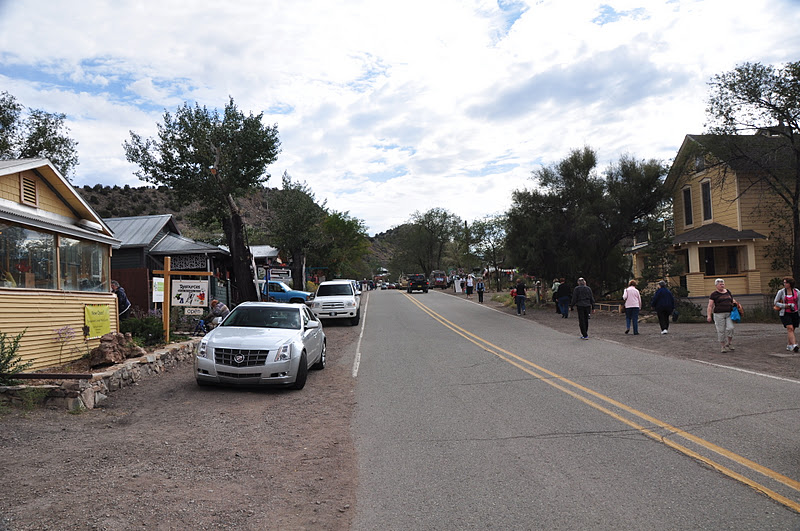
We had fun wandering through the many shops that lined the street.

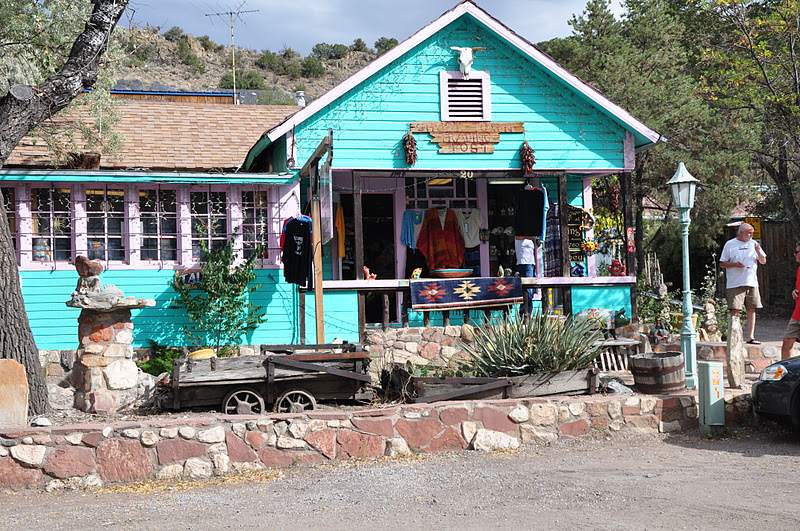
There is no quilt shop in Madrid.  It looks like there is an opportunity to renovate a house like this and open a quilt shop!  All the traffic that travels through Madrid, passes right by this front porch.  Hmmmmm, consider the possibilities. 

Click on the picture below to read the sign.  This one made me chuckle.

Utah-New Mexico Vacation – Part 6

While walking through the vendors’ tents on the Fiesta grounds, I came across a tent filled with quilters!  I had found the New Mexico Quilters’ Association from Albuquerque, NM. 

This was the quilt–Spirit of the Fiesta–that was being raffled off.

During our break between events at the Fiesta, we decided to walk from our hotel to a local quilt shop.  Google indicated that it was 1.7 miles from our hotel to Southwest Decoratives and that the walk should take us about 35 minutes. 

This is a picture of me taken in front of Southwest Decoratives.  http://www.swdecoratives.com/

Even though I spent 45 minutes wandering around the shop, I still fell like I could have spent more time there–there was so much to see in this wonderful shop!

This is a picture of my patient husband waiting for me to finish shopping.  He doesn’t look happy in the picture, but he wasn’t feeling 100%–he was fighting a cold.  I think he deserves an award for walking with me to the quilt shop in the heat and then waiting patiently while I shopped.  I think he is a keeper!

For the most part, this shop carries  fabrics and patterns with a Southwest theme.  
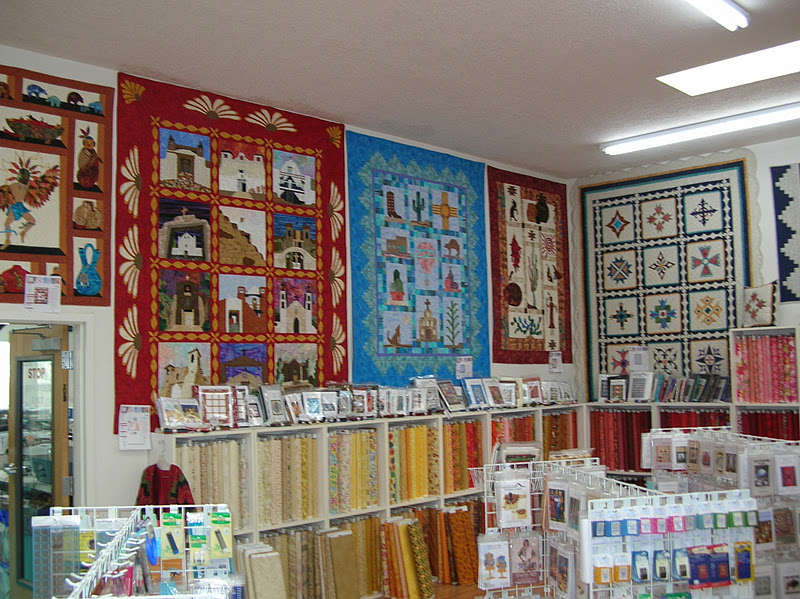
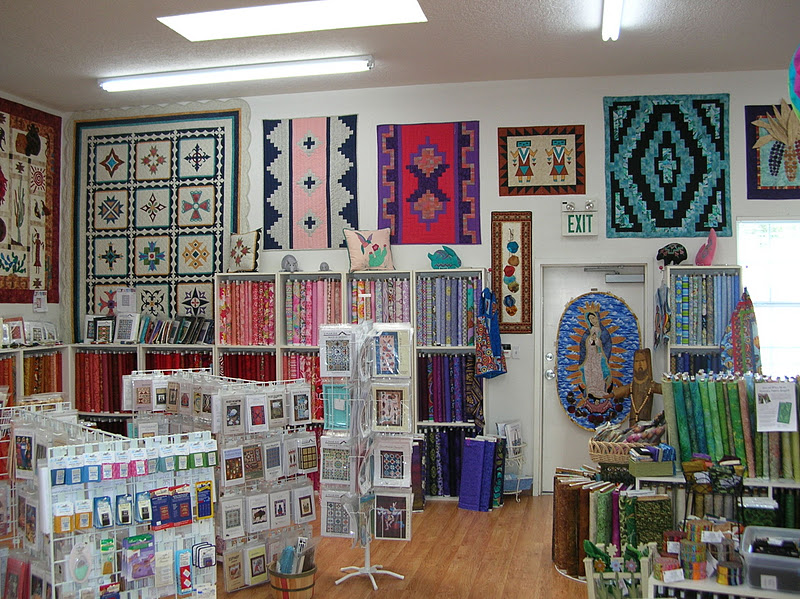
The walls were covered with quilts that take their inspiration from the local landscape and culture.

I purchased balloon fabrics to make myself a quilt to commemorate our balloon ride.  The fabric on the left is from Timeless Treasures.  The panel and fabric on the right (view of the tops of balloons) are from Andover Fabrics.  I am planning to use the pattern, Sidelights to make my quilt.

This stripe print is called Monument Valley Stripe and is by Michael Miller.  Although Monument Valley was not a place that we visited on this trip, the red rock and pictured in this fabric is very typical of the red rock formations that we saw in several places on this trip.  My current plan for this print is a Seminole row type quilt.

This shop had the SW inspired quilt, Reflections, draped over a chair and they were selling it as a kit.  As I had limited room in my suitcase and because fabric is heavy, I elected to buy the print yardage and pattern only.  The fabrics that the shop put with this print in the quilt were solids or near solids and I felt I could purchase those at home.  By leaving them behind, I was able to put other fabrics in their place in my suitcase–fabrics that I wouldn’t likely be able to get at home.

This print is A Robert Kaufman print called, American Heritage and reminds me of the jewellery made by the native craftsmen that this area is well known for.

The prints in the next picture are of cacti.  I also fell in love with the Saguaro Cactus quilt hanger.  I don’t have a pattern in mind right now for these prints, but I will be keeping my eyes open for something to showcase these interesting prints.

This is a panel of African animals that I will be adding to my African fabric stash for a “someday” quilt that I have planned.  🙂

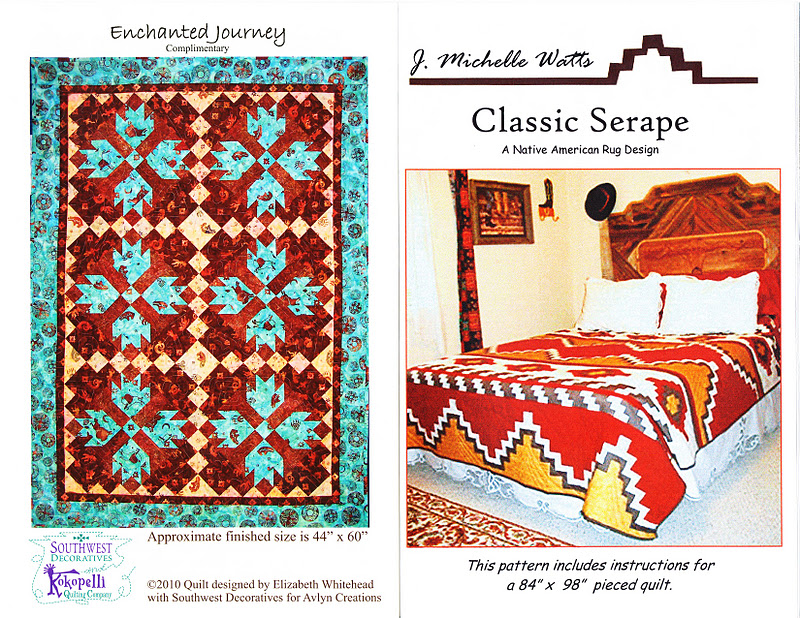
These are the patterns that I brought home with me.  There were racks of patterns from local designers who are inspired by the native basket, pottery, and weaving designs.  I had a difficult time deciding on just a few patterns to bring home.

This Easter Egg pattern is one that I had seen on line in the past but never was able to locate it in my quilt shop back home.  I think this will make a cute table topper for spring.