Utah-New Mexico Vacation – Part 5

Balloon Fiesta kicked off on the morning of Saturday, October 1.  We left our hotel at 4:45 am in order to navigate the heavy traffic jamming the roads on the way to the Fiesta field and in order to be in our seats ready to enjoy the Dawn Patrol show at 5:45 am. 
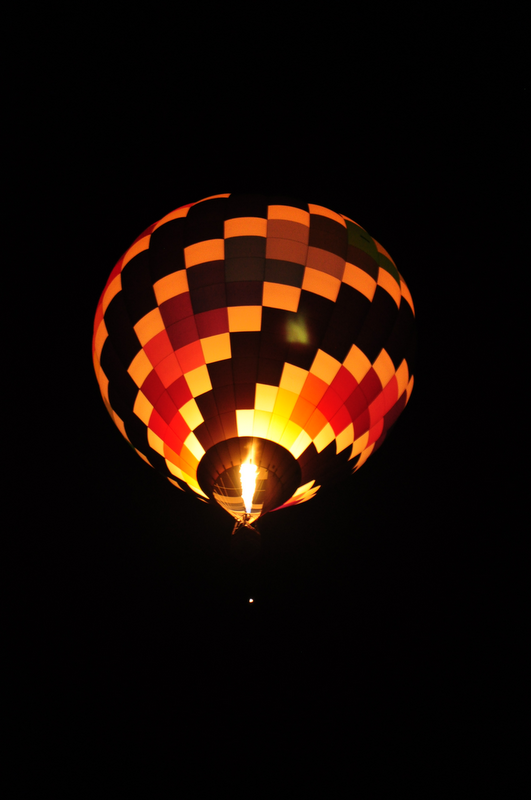
Two California balloonists developed position lighting systems that allow balloons to fly at night. Dawn Patrol pilots take off in the dark and fly until it is light enough to see landing sites. Fellow balloonists appreciate the Dawn Patrol because they can watch the balloons and get an early idea of wind speeds and directions at different altitudes.
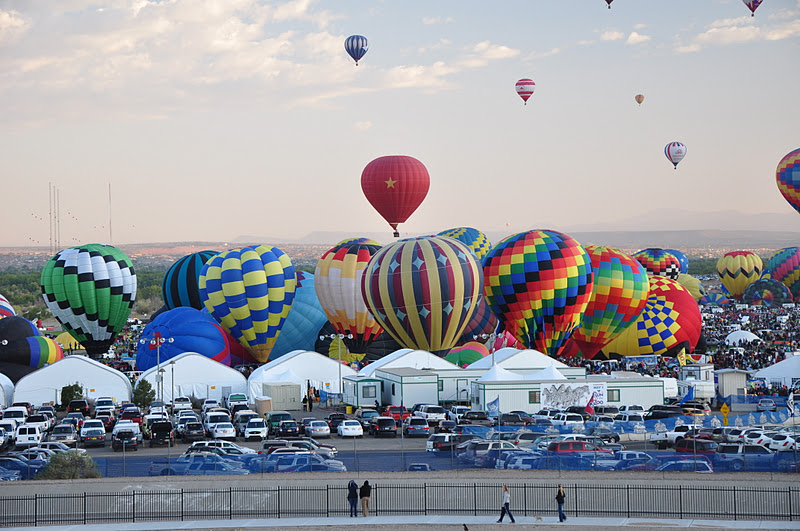
The Morning Glow then started about 6:30 am.  Balloon glows are nighttime static displays of illuminated balloons.  “All burns”, when all the balloons fire their burners and light up at the same time are spectacular. 

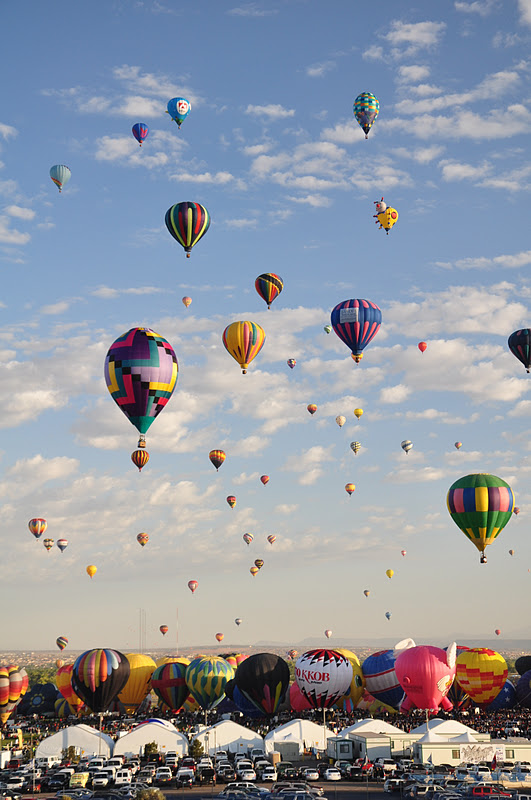
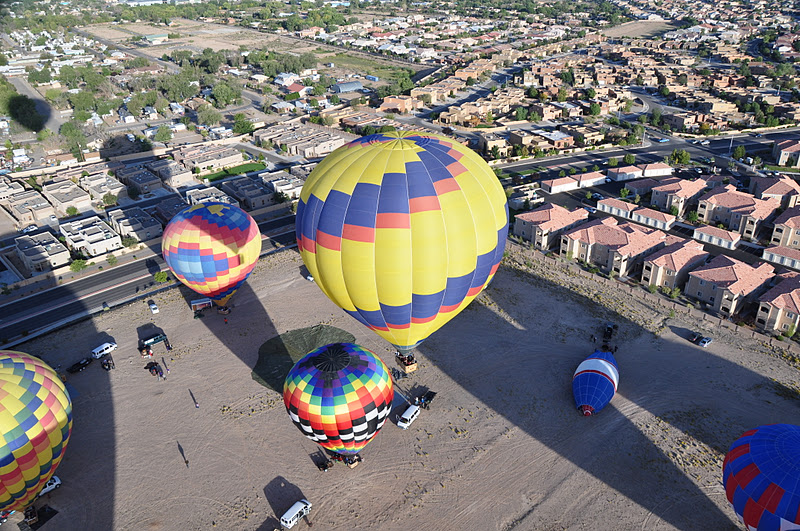
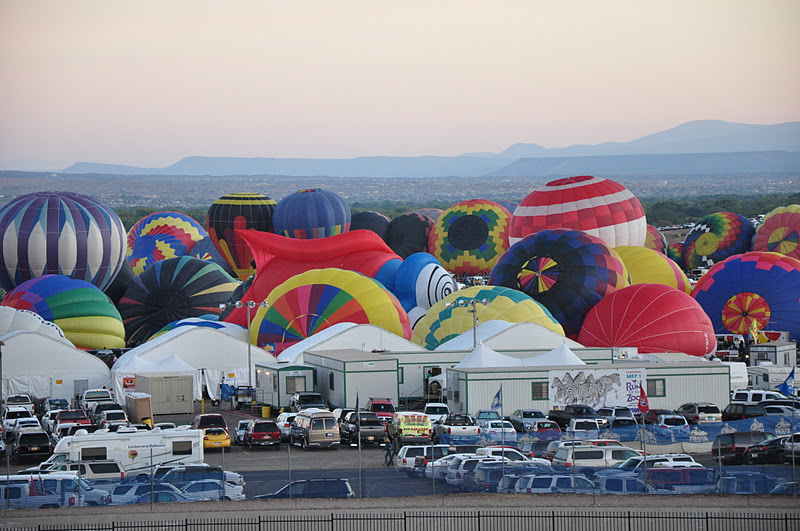
In the next picture, balloons are getting ready for Mass Ascension at 7:00 am.  During the first day of Fiesta, the Albuquerque International Balloon Fiesta set a new world record for the most hot air balloons launched in one hour with 345 hot air balloons taking to the air in one hour during Mass Ascension on October 1, 2011.
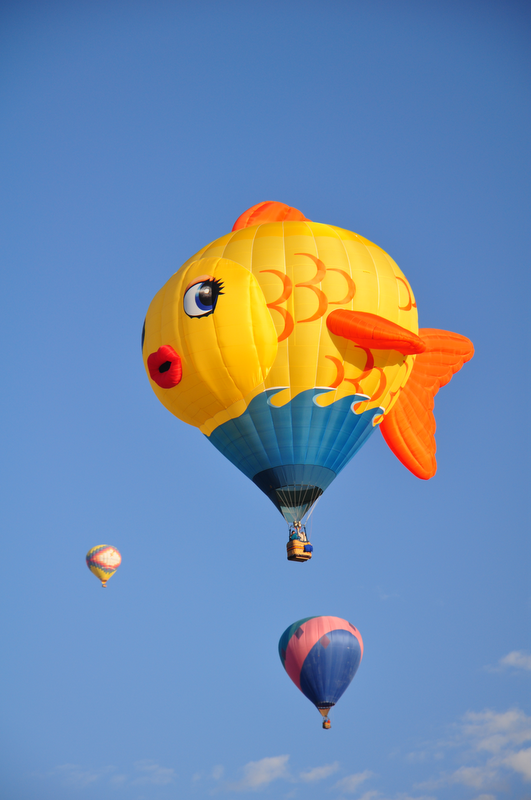
The special shape balloons were a hit with the crowds.  Here is Darth Vader, a balloon from Belgium.

This is Spyderpig from Albuquerque.

These are two of the three bees.  The red bee on the left is Lilly Little Bee from Jeffersonville, VT.  The smaller purple bee on the right is Joelly from Maricopa, AZ.

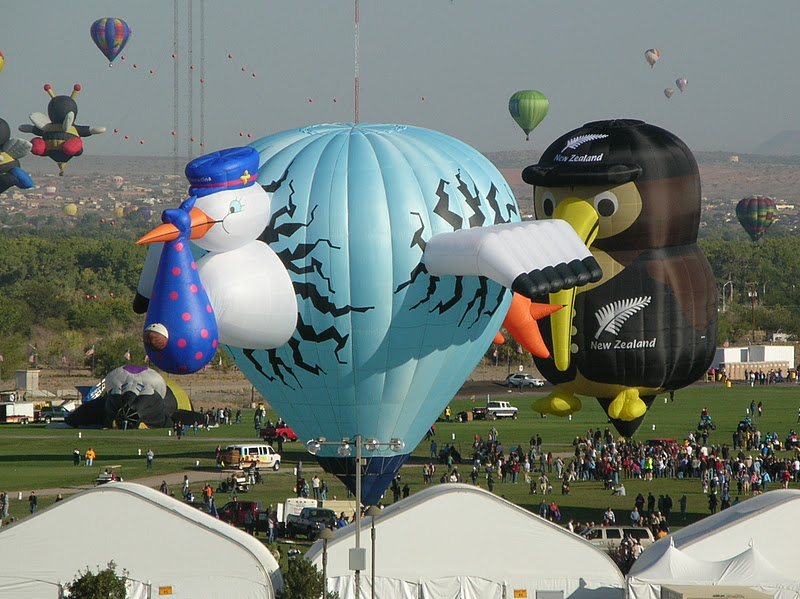
The is The Stork from Corrales, NM and Iwi The Kiwi from New Zealand.
This is Lady Jester from Albuquerque, NM.

This is Sushi from Incline Valley, NV.

This is Centr Stage from Albuquerque, NM.
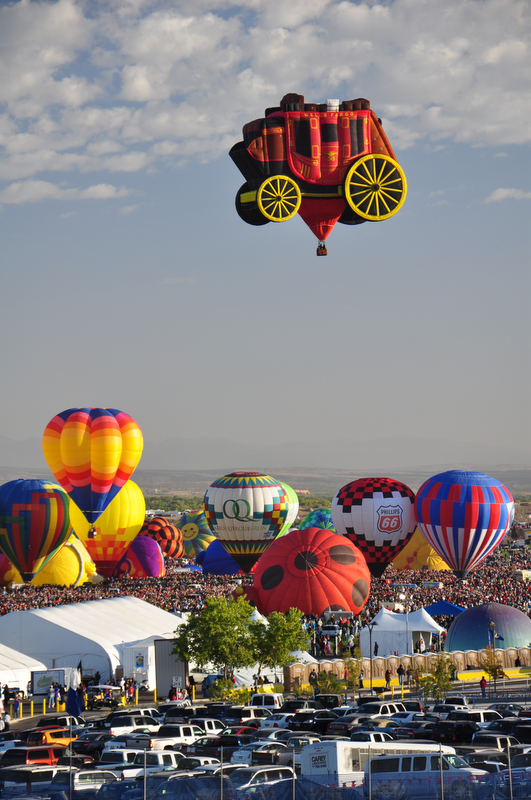
This is Airabelle, The Flying Cow from Priddis, Alberta.
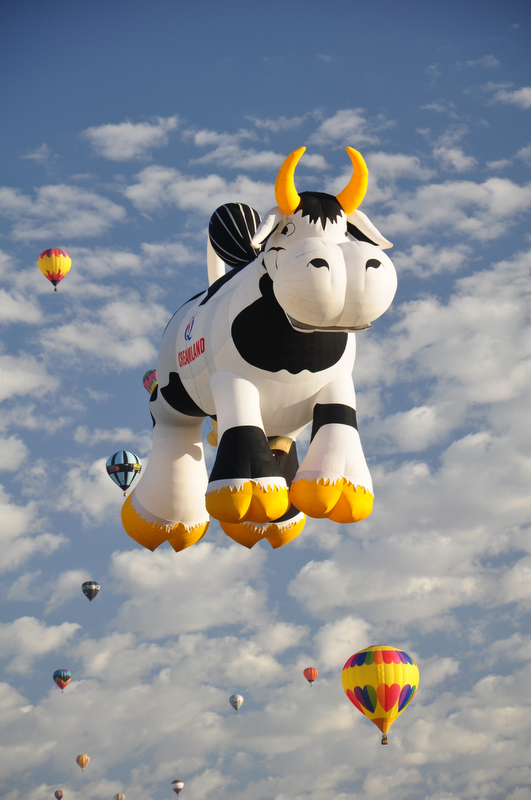
Here are all three bees.

This is the Dos Equis balloon with the beer bottle, Select 55 in the background to the left of Dos Equis. 
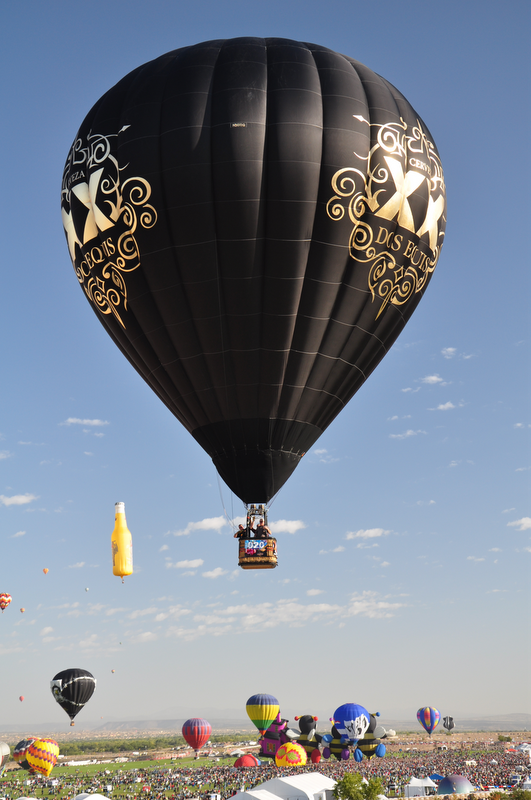
Sometimes the balloons came so close to where we were sitting that it seemed like we should be able to touch them.
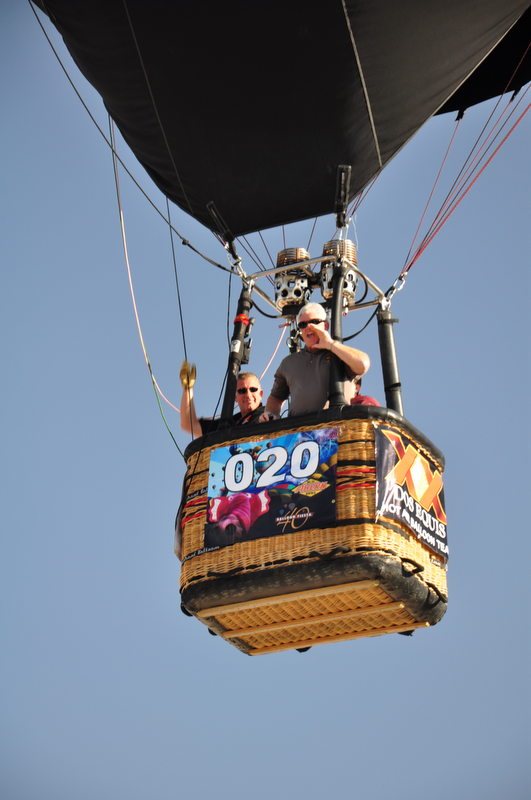
The next picture is of a Balloon Fiesta Zebra.  Balloon Fiesta Launch Directors (ZEBRAS) are volunteers that coordinate the balloon launch. They handle crowd control, observe pilots , and work with them to get their balloons safely off the ground every morning during Balloon Fiesta.

Every Zebra checks to see that every balloon is airworthy and that there is no damage to the either the envelope or the basket. They then let the pilots know where they will be standing and what hand signals to look for during the launch sequence. They also discuss wind conditions and the traffic directly overhead. The Zebras then walk each pilot out to a clear area near the launch site. When the skyway is clear, the Zebra blows his whistle and gives a “thumbs up” signal letting the pilot know he is clear to take off.

After the Mass Ascension was over and all balloons had launched from Fiesta Park we headed back to our hotel for a much deserved rest.  Then it was back to the Park in the late afternoon to get ready for  the Twilight Twinkle Show at 5:45 pm.  The next picture is of the balloons glowing while they are tethered to the ground in the early evening.

The next picture is of the gas balloons getting ready to launch for the America’s Challenge Gas Balloon race. 

Gas balloons ascend because the gas inside is less dense and lighter than the air on the outside of the balloon. Heating up regular air makes its molecules expand, becoming lighter than the surrounding atmosphere. That’s what causes hot-air balloons to lift off. Gas balloons used in races such as the Balloon Fiesta’s America’s Challenge use either helium or hydrogen, both lighter-than-air gases in their natural, unheated state.
Gas balloons differ from the hot air balloon that we had our ride in.  With both types of flight, pilots try to control their direction by taking advantage of different wind currents at different altitudes. Gas balloon pilots typically started out flying hot-air balloons, and then decided they wanted to be able to fly farther, higher and longer. Because gas balloons cost more to fly, they usually aren’t flown as often. Their flights can last for days, unlike hot-air flights, which usually last about an hour. Gas balloon pilots may prepare for months before a competition, and when they’re racing, they sometimes fly into dangerous weather conditions or over open seas, where an emergency landing could be a disaster. They even have to be careful not to fly over certain countries, where political conditions could make them targets of hostile fire. Gas balloons usually need more people to help with their launch than hot-air balloons. It takes about ten people to launch a gas balloon, according to the Balloon Federation of America, and about half that number to launch a hot-air balloon. For a competition, the gas pilots also use the services of meteorologists. The pilots’ strategies are largely based on weather conditions. The only way they can “steer” a balloon is to catch the best wind currents.

The gas balloon is inflated through a tube, called an appendix, and it takes hours for the inflation to be completed. The appendix stays open during flight to let excess gas escape and keep the balloon from bursting. Pilots make gas balloons rise by dropping weights, called ballast, from the balloon. A ballast is usually sand. The balloonists descend by letting some of the gas out of the envelope through a valve at the top of the balloon in a procedure called valving. There’s usually a cycle to a gas balloon flight. As the sun heats the gas-filled envelope, the balloon gets even more lift and can rise higher, to several thousand feet. At night, the gas inside the balloon cools off, and pilots drop bags of sand to keep from hitting objects on the ground. Then as the sun rises and heats the envelope again, the balloon gains even more lift since its load is lighter. The process usually lasts up to three cycles in a competition. When all the ballast is gone, the pilots have to land.
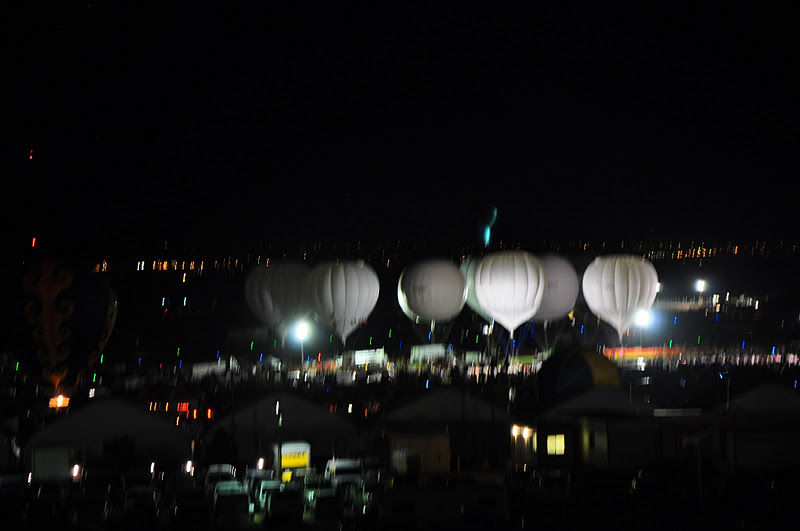
This year’s America’s Challenge winners travelled nearly 1,000 miles to near the Canadian border in North Dakota and in doing so, set the new America’s Challenge duration record of 71 hours and 31 minutes.
 
The Evening Glow was followed by a spectacular display of fireworks.

Utah-New Mexico Vacation – Part 4

One of the destinations for this vacation was Albuquerque–specifically, the 40th Annual International Balloon Fiesta.  We had arranged to take a balloon ride on Friday, September 30–the day before the Fiesta started.
We met our pilot and fellow passengers on the Fiesta field before 7 am to organize for our ride.  Balloons only launch during the morning hours.  As the sun warms the earth during the day the warm air rises creating thermal columns of air which make it very unstable for flying during the day.  In the morning and the evening, the thermal activity is minimal and the winds are the calmest. 
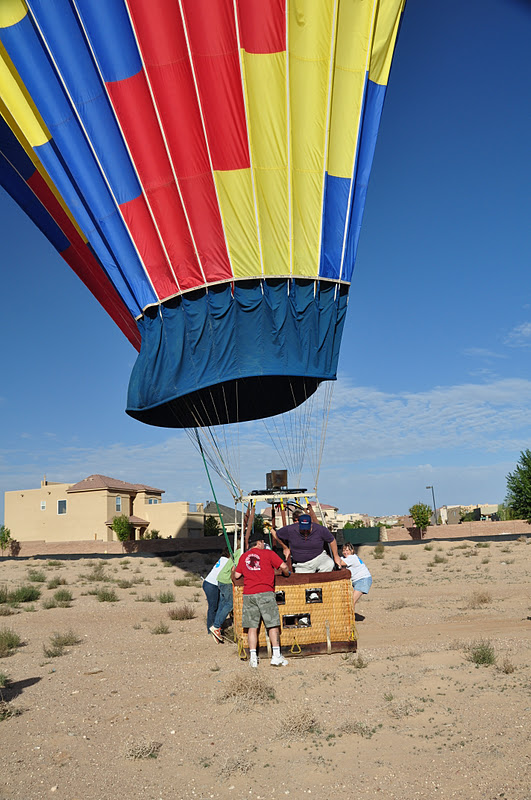
After arriving at the launch site, the business of setting up the balloon started.

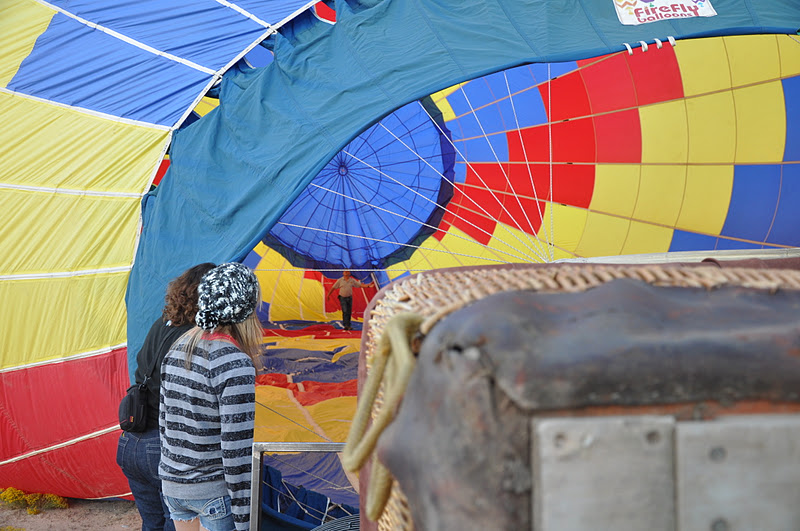
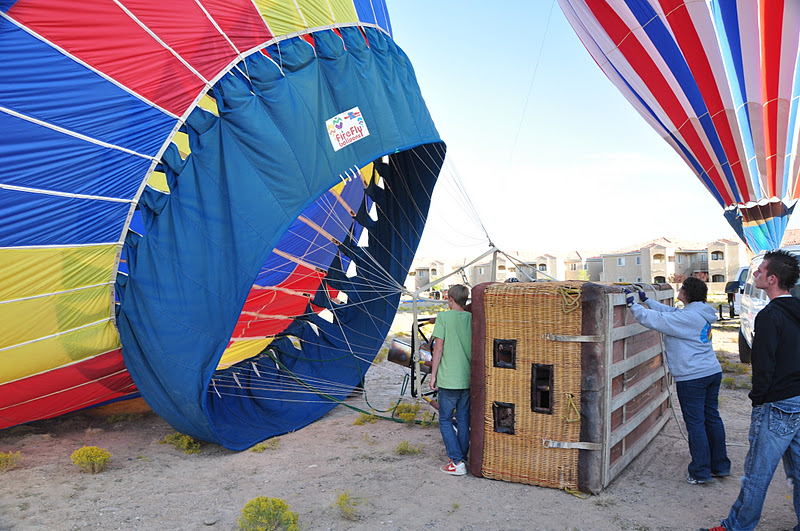
The envelope was removed from the bag and laid out in a long line. The burners are attached to the uprights, and the basket is attached to the cables on the bottom of the envelope.

The balloon was partially inflated with cold air from a gas-powered fan, before the propane burners are used for final inflation.

As you turn around, you can see other balloons in various stages of inflation.  There are many excited people on the field now.  Even though this is will be my first ride, I can’t help but catch the wave of excitement.

Here we are in the basket ready for lift off.

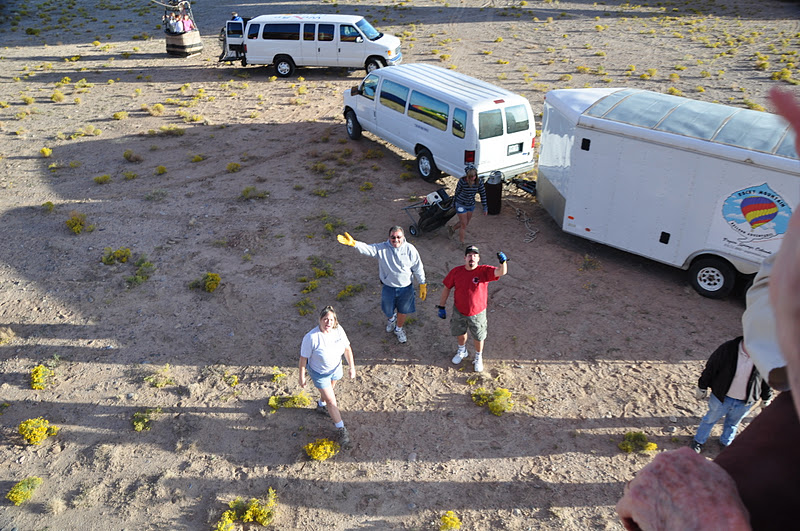
We slowly and gently lifted off the ground.  These folks are our chase crew.  Our pilot stayed in contact with them as we floated above the city.

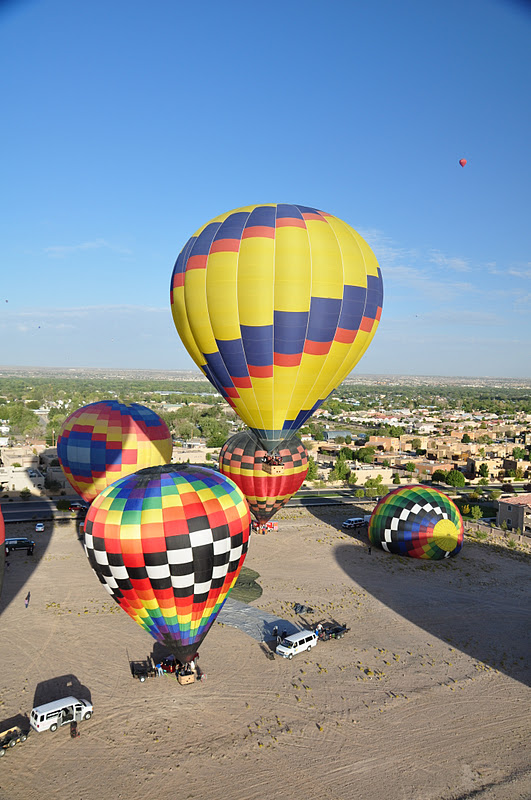
Other balloons were launched from the same site as our balloon with passengers like us.

There were just under 30 balloons that launched the same morning as us.

I have a fear of heights but I did not have any problems flying in a balloon.  Flying in a high sided balloon basket is not like standing in a roof or a high ladder. You don’t get that vertigo feeling. It is more like the ground is unfolding beneath you, and, because you are moving with the wind, you don’t feel any wind blowing. The basket does not rock or sway so you can’t possibly fall out.

Winds determine a balloon’s direction.  The pilot can steer a balloon to a limited extent by adjusting the balloon’s altitude to make use of different wind speeds and directions.
We were prepared by our pilot for the three “bumps” that we would feel as the basket touched the ground. 

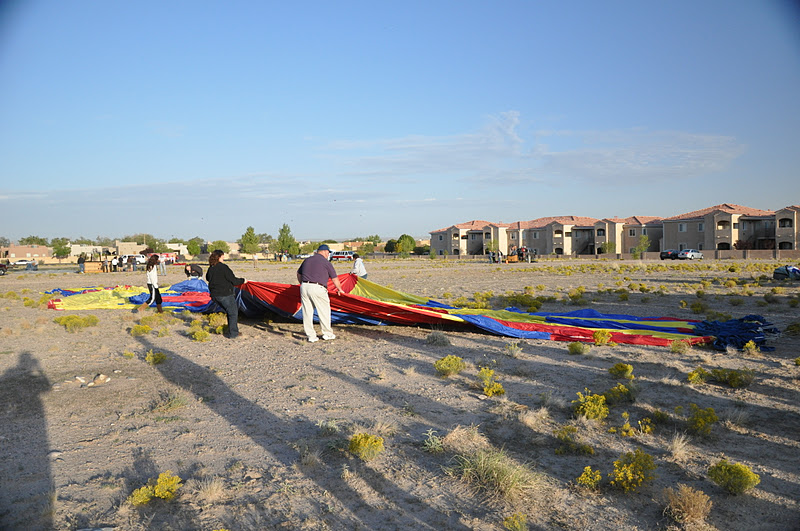
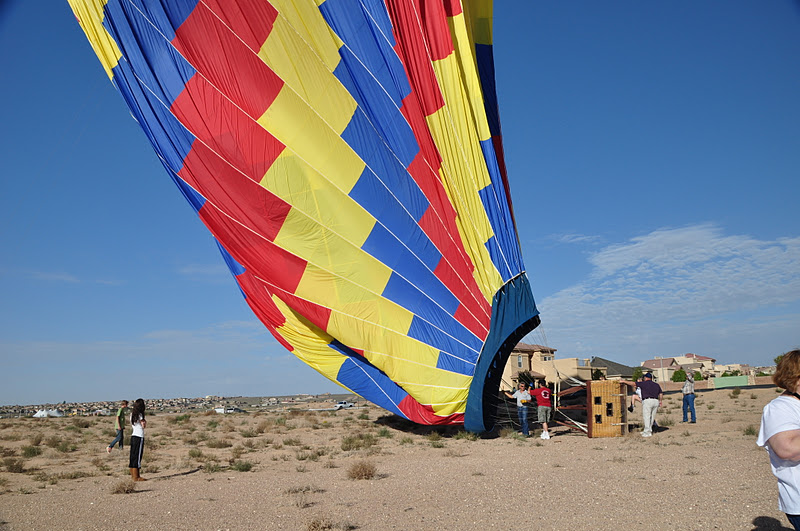
After we were helped out of the basket by the chase crew, the balloon came down and the process of packing up the balloon began.

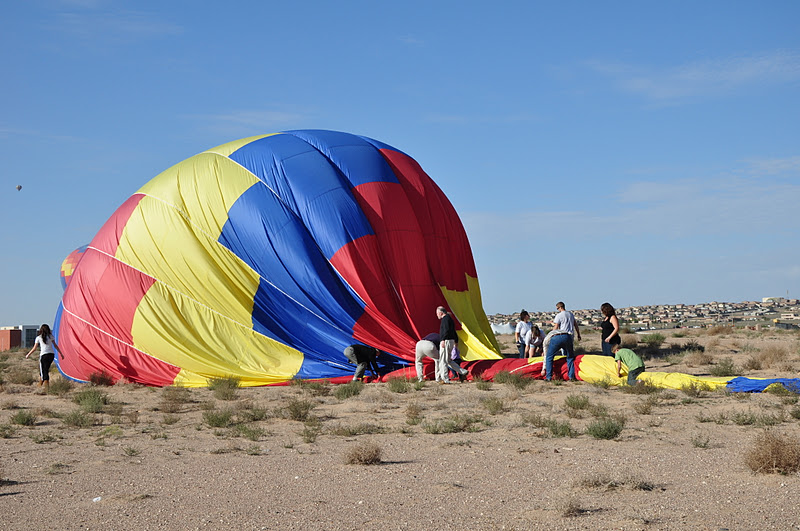
Several of the passengers assisted with the packing up of the balloon.

And finally the balloon and basket are packed away in the trailer and we all headed back to the Fiesta park in the chase vehicle.

This was a fabulous once in a lifetime experience.  If you ever get a chance to fly in a a hot air balloon, don’t hesitate!

Utah-New Mexico Vacation – Part 3

No trip to see canyons would be complete without a stop at the Grand Canyon.  This picture of my husband and I was taken at Desert View–one of the many viewpoints on the edge of the Grand Canyon in Grand Canyon National Park.

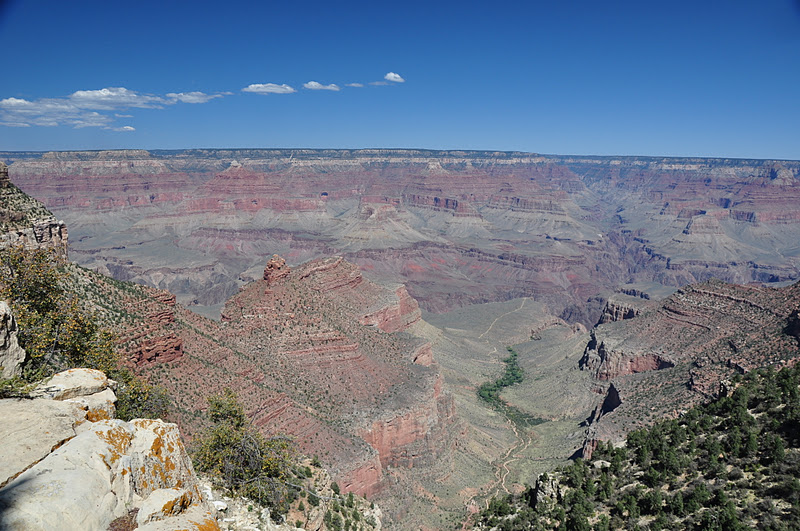
This is another view of the canyon taken from a viewpoint at Grand Canyon Village, just behind Bright Angel Lodge.

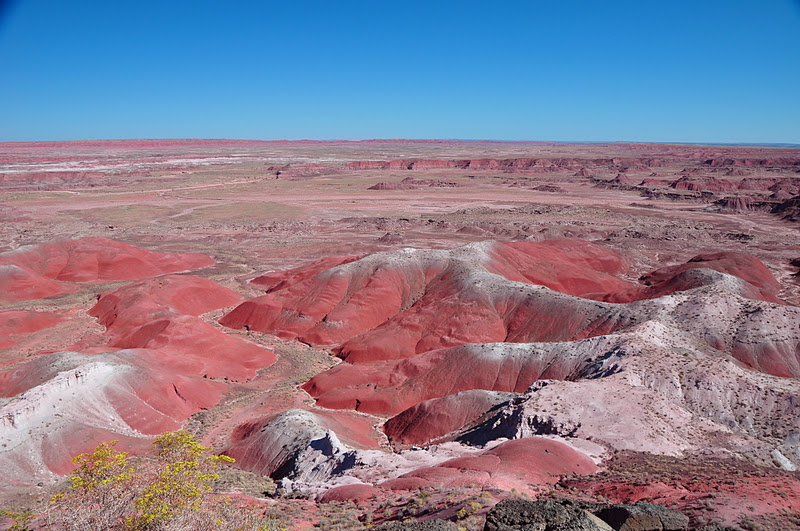
The next photo is taken of the Painted Desert within the Petrified National Park.  We had a very brief photo stop in this park. 

We really enjoyed our tour of the Acoma Pueblo and Mission, located 1 hour east of Gallup, New Mexico.  Acoma Pueblo’s Sky City is situated on a 370 foot high mesa. This is the homeland for the Acoma people. There are 300 homes and structures on the mesa which are owned by Acoma women. They are passed down in their families. This is said to be the oldest continually inhabited community in the country, dating from around 1150 AD.

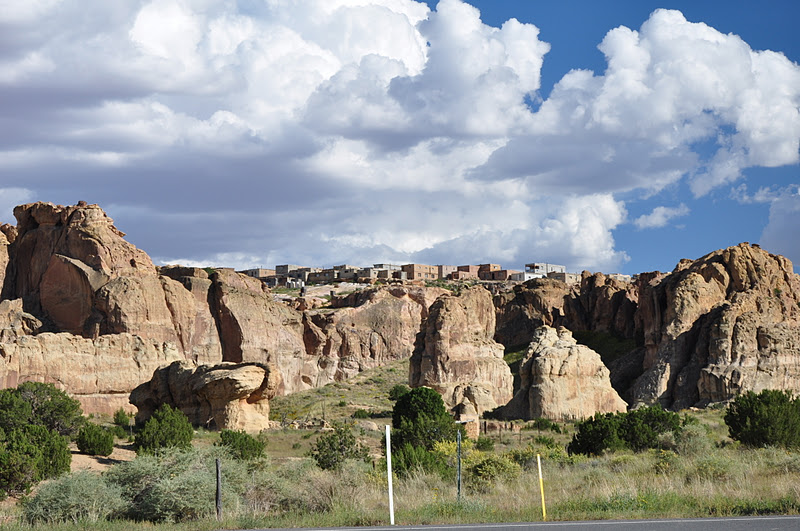
If you click on the next photo, you will be able to see the pueblo on top of the mesa.  There were no roads to the top of the mesa until John Wayne came to the Acoma people in the late 50’s and wanted to make a movie.  The road was the result of a barter for the right to film a John Wayne movie.  The “John Wayne Highway”is the primary access point to the top of the mesa today.  Most of the 4,000 tribal members live in the nearby villages of McCartys and Acomita–only a handful occupy the mesa on a full-time basis.  However, most families maintain homes on the mesa which they use on feast days and as summer getaways.  There is no running water or electricity on the mesa and plumbing is accommodated via out-houses located on the mesa rim.

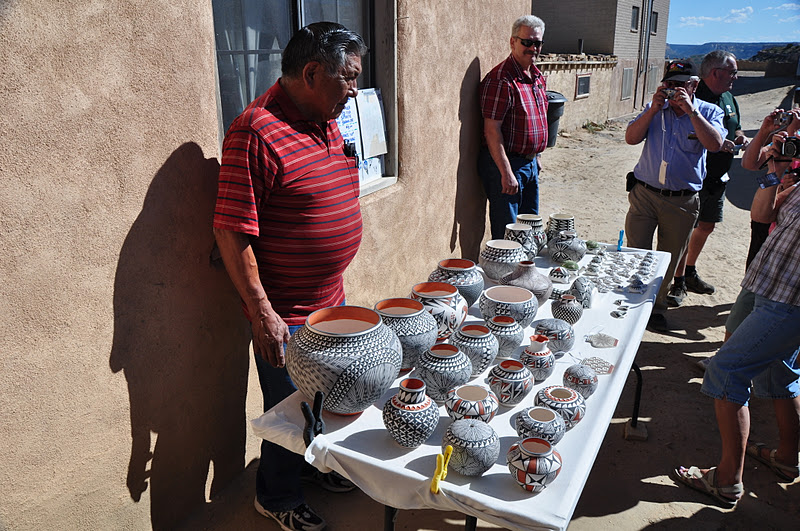
We were provided opportunities to purchase pottery and other art directly from the artists as we walked through the pueblo on our tour.

Utah-New Mexico Vacation – Part 2

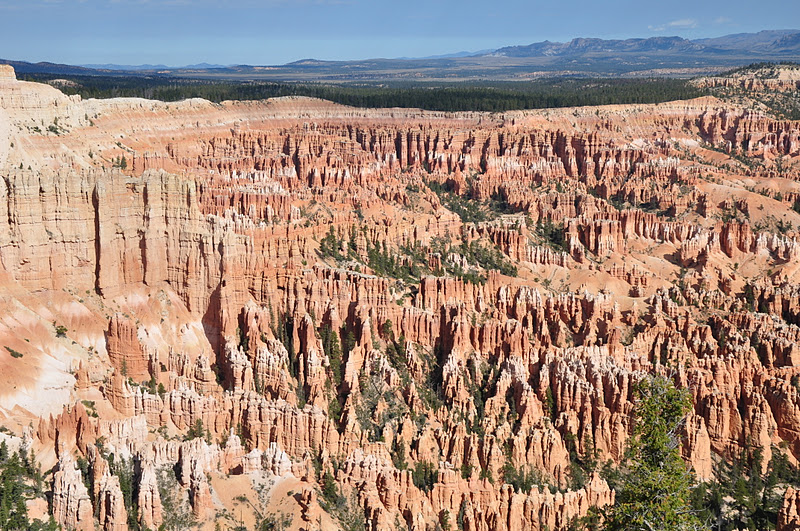
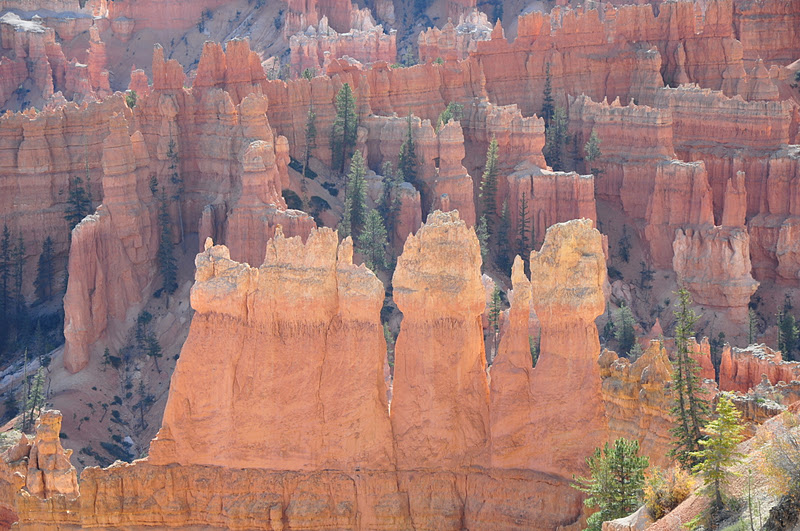
Bryce Canyon National Park was our favorite park that we visited on this trip.  The scenery at Bryce takes your breath away!
These pictures were taken from various view points in Bryce Canyon.


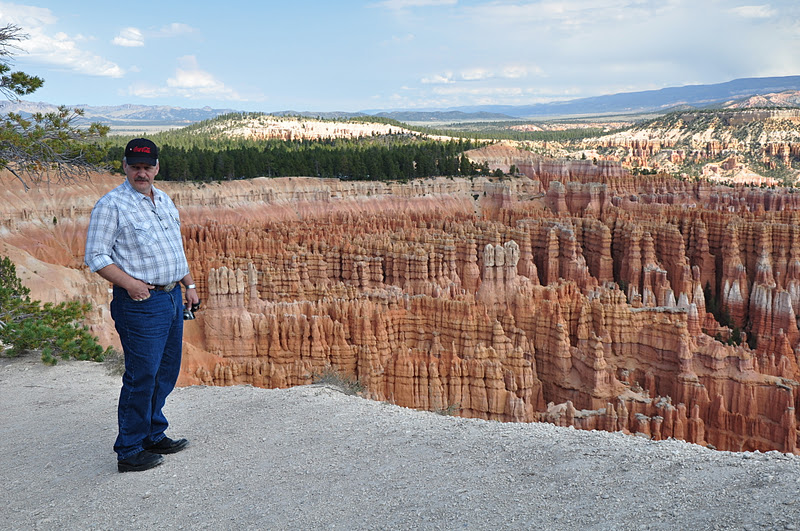
This is my husband–standing on the edge of Bryce Canyon.

In the gift shop at the entrance to Bryce there were some quilt kits to make your own souvenir of Bryce Canyon.  The kits contained the photo blocks and the pattern.  You have to add your own batik fabrics to make the block sashing and quilt borders.  I picked up one of these kits.

Who knew that you could find something quilt related in a National Park?

Utah-New Mexico Vacation – Part 1

We recently returned home from a holiday to the U.S. – a 20 day tour (Sept 21 to Oct 10) that took us south of Saskatchewan through Wyoming, Utah, Arizona, and New Mexico and then back north through Colorado, and the Dakotas to Saskatchewan. 
With two cameras between my husband and I, we managed to bring home over 3,000 pictures.  It has taken me hours to sort through those pictures to choose just a few to share here on my blog.  Even though I thought I was just picking a few pictures, I have ended up with 11 posts! 
This was my third tour and my husband’s first tour with Ryjo Tours out of Tessier, Saskatchewan.  http://www.ryjotours.ca/index.html

The scenery on this trip was constantly changing.  We often looked out of the window as we were travelling to see the most interesting landscapes. 
This picture was taken near Grand Junction, Colorado. 

When we were in Moab, Utah, we visited Arches National Park, Canyonlands National Park, and Dead Horse Point State Park.

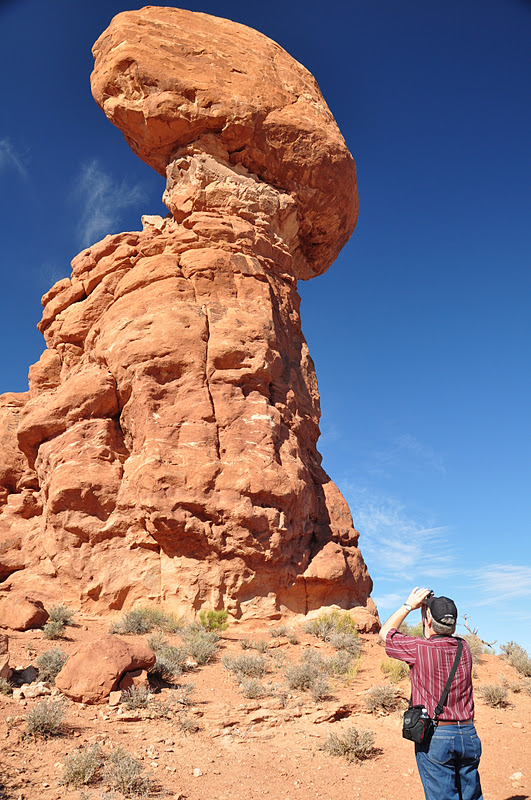
This is a picture of Balanced Rock in Arches.

This is a picture of the famous Delicate Arch, also located in Arches.  This is the rock formation that is on the Utah state licence plate.

This is the view from Dead Horse Point State Park.  You can see the windy roads that the Jeeps and ATV’s travel on to explore the canyons.

These pictures were taken in Canyonlands.

This was a picture I quickly snapped as I was getting back on the bus after a lunch break in Richfield, Utah.

The next two pictures were taken at Red Canyon, just outside of Bryce Canyon National Park.